Introduction: Cryogenic vials help cell line repositories connect low temperature storage, sample identity, and usable records over long preservation periods.
For learners studying cell line repositories, the vial is easy to underestimate because attention often goes to cell culture conditions, freezing media, recovery performance, or contamination control. In long-term cryopreservation, however, the sample container also becomes part of the repository’s memory system. It holds the material, carries the identifier, fits the storage format, and helps connect a physical tube to a record that may be needed months or years later.
A cell line repository is not simply a freezer full of tubes. It is a managed environment where each preserved cell line must remain identifiable, retrievable, and interpretable after time has passed and staff, projects, or record systems may have changed. Long-term cryopreservation supports biological continuity, but the repository also needs continuity of information. A stored vial should represent a known cell line, passage context, batch or lot relationship, storage position, and handling history as defined by the institution’s own procedures. If the container is hard to identify, difficult to place in a consistent storage grid, or separated from reliable records, the biological material may still exist while its practical research value declines. This is where cryogenic vials for cell line repositories sit inside the broader storage context. They do not make a cell line viable by themselves, and they do not replace decisions about culture quality or cryopreservation method. Their role is to support the physical and informational side of preservation. In routine repository thinking, a vial must tolerate the intended low-temperature environment, remain compatible with storage boxes or racks used by the facility, and present an identifier that can be read without unnecessary ambiguity. The ATCC cell culture guidance gives useful background on cell culture and cryopreservation concepts, while repository users still need to apply their own validated SOPs for the specific cell types, freezing conditions, and recovery expectations in use. The long time horizon changes the meaning of a small container. A short-term working stock may be handled by the same person who prepared it, but a repository sample may be retrieved by someone who was not involved in the original storage event. That makes the connection between container, label, and record more important. A cryogenic vial supplier for long-term cryopreservation is therefore often discussed not only in terms of material and capacity, but also in relation to identification features, storage density, packaging format, and how clearly product specifications describe the intended use context. Those points do not prove suitability for every repository, but they explain why cell line storage is a sample management issue as well as a temperature issue.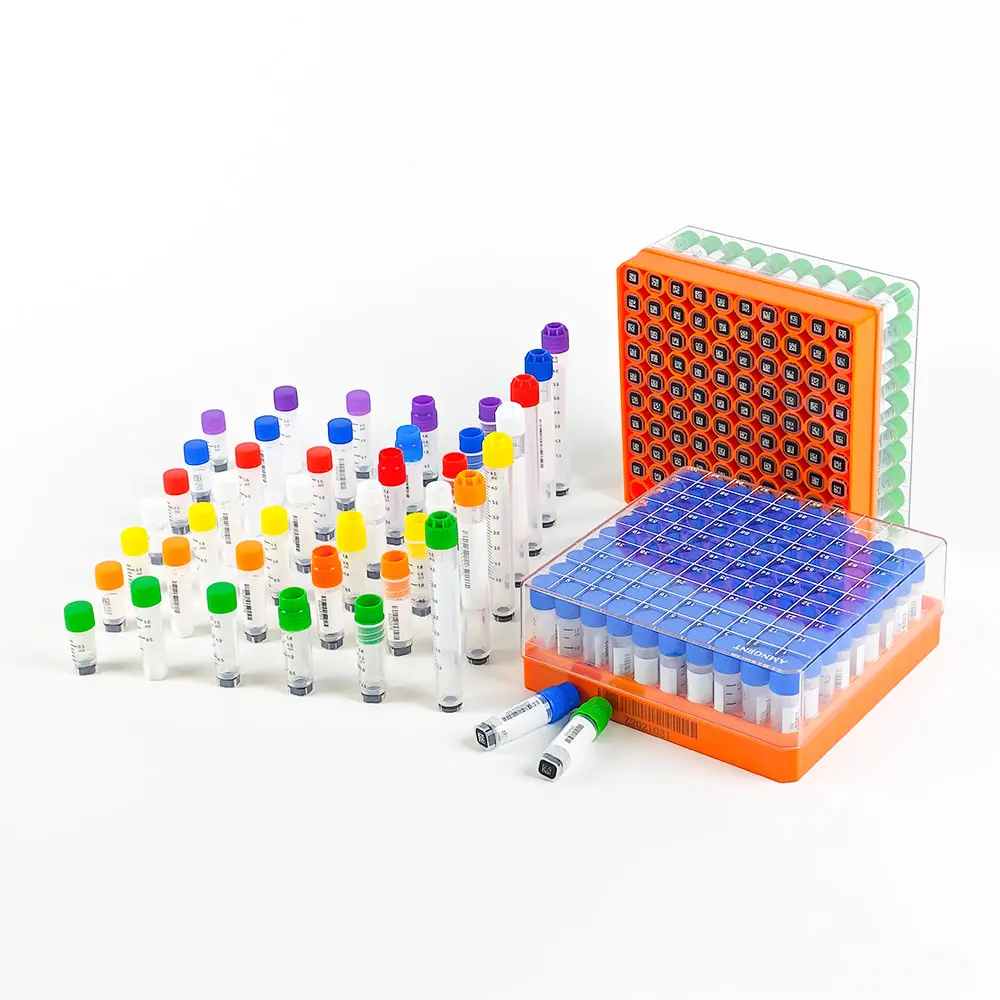
A common misunderstanding is to treat the cryogenic vial as if it were the cryopreservation protocol. In practice, these are different layers of the same preservation environment. A protocol addresses how cells are prepared, frozen, stored, monitored, and recovered under a defined institutional method. The vial is the container and identification carrier used within that method. It can support the method by providing a suitable storage format and durable identification surface, but it does not define freezing medium composition, cooling rate, recovery steps, viability criteria, or biosafety controls. For this reason, a knowledge article about cryogenic vials should not be read as an operational cell freezing procedure. This boundary matters because cell line repositories usually carry both scientific and administrative responsibility. The scientific side asks whether the stored cell line can be recovered in a usable condition under the repository’s method. The administrative side asks whether the sample can be found, distinguished from related stocks, linked to records, and handled under appropriate safety practices. WHO biosafety guidance is useful as a background reminder that biological materials must be managed within risk-aware laboratory systems, but it does not replace a repository’s own SOPs. Likewise, a vial described for cell line repositories should be understood as one component in a controlled storage workflow, not a universal guarantee for all cell types, all storage periods, or all liquid nitrogen arrangements. The distinction also helps readers interpret supplier language more carefully. Terms such as cryogenic vial manufacturer and cryogenic vial supplier may describe the commercial source of a consumable, while phrases such as long-term cryopreservation or cell line repositories describe the application context in which that consumable may be considered. Those phrases should not be stretched into promises about biological outcome. A repository still needs to confirm internal requirements such as accepted vial formats, storage phase, labeling rules, batch documentation, and whether the identifier can be read by its existing equipment or record system. This is especially important for 2D cryogenic vials, where the value of the code depends on how the repository captures and maintains the linked data.
AMNGENT Cryogenic Vials can be used as a practical example of how product information signals relevance to cell line repository storage without turning the discussion into a supplier comparison or a freezing method. Relevant application wording includes Biobanking & Long-Term Storage and cell line repositories, which places the product in a low-temperature sample management context. The useful reading task is to connect those claims with concrete features such as capacity range, coding format, cap and thread options, and cryobox compatibility. These details help a learner understand repository container vocabulary, while final use still depends on the laboratory’s own SOP, storage conditions, and record requirements.
These signals translate product details into repository concepts. A reader can see that the vial is being framed around container integrity, traceable identification, and efficient storage organization. At the same time, conservative interpretation is important. The presence of coding, sterilization language, or low-temperature application context should not be used to claim suitability for all cell lines, all preservation durations, all liquid nitrogen methods, or all institutional record systems. The stronger reading is narrower and more useful: these features show why a cryogenic vial supplier may be relevant to long-term cryopreservation discussions, while the repository remains responsible for validating how the consumable fits its own process.
Cryogenic vials in cell line repositories should be understood as physical containers, identification carriers, and storage organization tools within a larger long-term cryopreservation system. They do not replace cryopreservation protocols, biosafety procedures, or institutional record control, but they can strongly affect whether a preserved cell line remains findable and interpretable over time. Readers who want to understand AMNGENT Cryogenic Vials in this context can review the stated capacity range, coding features, screw cap formats, and cell line repository application language as terminology anchors rather than as universal use guarantees.
Q:What role do cryogenic vials play in cell line repositories?
A:Cryogenic vials hold preserved cell line samples, carry identifying information, and help connect each physical sample to repository records and storage locations. Their role is practical and informational: they support long-term cryopreservation management by making samples easier to store, identify, retrieve, and document within the repository’s own procedures.
Q:Are cryogenic vials for cell line repositories the same as a cryopreservation protocol?
A:No. A cryogenic vial is a container and identification platform used within a cryopreservation workflow, while a cryopreservation protocol defines how cells are prepared, frozen, stored, and recovered. Vial specifications can support the workflow, but they do not define freezing media, cooling rate, recovery steps, or cell line-specific performance expectations.
Q:How can barcode and 2D code features support long-term cryopreservation records?
A:Barcode, QR code, and Data Matrix features can help link each vial to a digital or written record, especially when many cell line stocks are stored across boxes and freezer positions. They support traceability and inventory review, but compatibility with specific scanners, software, and repository data rules should be confirmed before relying on them.
Animal Cell Culture Guide | ATCC
Laboratory biosafety manual, 4th edition
ISO IEC 16022 Data Matrix bar code symbology specification


